
 Send Inquiry


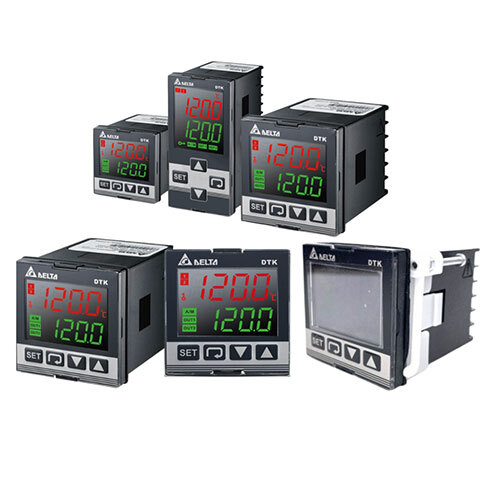
DTK series
Product Details:
- Load Capacity Customizable
- Mounting Type Floor Mounting
- Screen Size 4 inch
- Processor Type Microcontroller Based
- Application Industrial Heating
- Automation Grade Automatic
- IP Rating IP55
- Click to View more
X
DTK series Product Specifications
- Industrial Heating
- Automatic
- 220 V / 380 V / 415 V
- Temperature Sensor
- Yes
- Depends on Model
- Electric
- IP55
- Digital
- 50 Hz / 60 Hz
- Single Phase / Three Phase
- 4 inch
- Up to 1200C
- Energy Efficient, Robust Construction
- Floor Mounting
- Customizable
- 2 kW to 15 kW
- Microcontroller Based
- Mild Steel
- Wired
- Standard 1.5 m
- Overheat Protection, Emergency Shutoff
- Available
- 0 to 50°C
- High Temperature Alloy
- Grey
- Ceramic Fiber
- Customizable
- LED Display
Product Description
The Delta DTK Series PID controllers are compact, reliable, and widely used in basic temperature and process control applications. These controllers support standard input types and offer high precision control for general-purpose industrial environments.
Key Features:
- Cost-effective solution for basic control needs
- Compact design with standard panel mounting sizes
- Easy configuration with user-friendly front display
- Supports thermocouple and RTD inputs
- Fast sampling for accurate temperature feedback
Models: DTA7272V0, DTK4848C01, DTK4848R01, DTK4848R02, DTK4848R12, DTK4848V01, DTK4848V02, DTK7272C01, DTK7272R01, DTK7272V01
Comprehensive Safety and Modern Automation
The DTK series integrates multiple safety features, including overheat protection and emergency shutoff, ensuring secure operation in demanding industrial environments. Automation is enhanced by microcontroller-based digital controls and a user-friendly 4-inch LED display, providing precise temperature management and real-time monitoring for consistency and peace of mind.
Customizable and Versatile Design
Designed for flexibility, the DTK series offers customizable chamber dimensions and load capacities, catering to specific industrial requirements. Its mild steel construction, IP55 rating, and floor mounting capability guarantee enduring performance under a range of ambient conditions (0 to 50C). With options for power, voltage, and phase, this series fits various operational settings and industrial standards.
Service and Support Network Across India
Installation services are available for all DTK series units. Our expansive dealer, distributor, supplier, retailer, wholesaler, and exporter network ensures comprehensive support throughout India. Customers benefit from prompt assistance, professional installation, and after-sales service to maximize uptime and operational efficiency.
FAQ's of DTK series:
Q: How does the DTK series ensure safe operation in industrial environments?
A: The DTK series is equipped with overheat protection and an emergency shutoff system. These features are designed to automatically mitigate risks associated with excessive temperatures and ensure operator safety during any malfunction or abnormal condition.Q: What types of applications can the DTK series be used for?
A: These units are ideal for industrial heating processes that require precise and high-temperature control, such as material testing, metal treatment, and laboratory heating applications, due to their high temperature range, robust construction, and customizable chamber sizes.Q: When should I consider customizing the chamber dimensions or load capacity of my unit?
A: You should customize the chamber dimensions or load capacity if your industrial process requires heating larger or uniquely shaped items, or if your operation has specific throughput demands, ensuring optimal efficiency and fit for your application.Q: Where can I purchase or receive installation services for the DTK series in India?
A: You can acquire the DTK series through our established network of dealers, distributors, retailers, suppliers, traders, and wholesalers, with installation services available nationwide to ensure proper setup and performance.Q: What is the process for controlling and monitoring the temperature in the DTK series?
A: Temperature is managed via a digital, microcontroller-based controller with a reliable temperature sensor and a 4-inch LED display. This setup allows for accurate, real-time adjustments and remote control options for enhanced convenience.Q: What are the main benefits of using the DTK series for industrial heating?
A: The DTK series offers energy efficiency, robust construction, and advanced safety mechanisms. With customizable features, efficient insulation, and automated controls, it minimizes operational costs and maximizes productivity.Q: How does the DTK series accommodate varying power and voltage requirements?
A: The DTK series supports a range of power options (2 kW to 15 kW) and can operate on 220 V, 380 V, or 415 V with both single-phase and three-phase configurations, making it adaptable to diverse industrial electrical standards.Tell us about your requirement

Price:
Quantity
Select Unit
- 50
- 100
- 200
- 250
- 500
- 1000+
Additional detail
Mobile number
Email

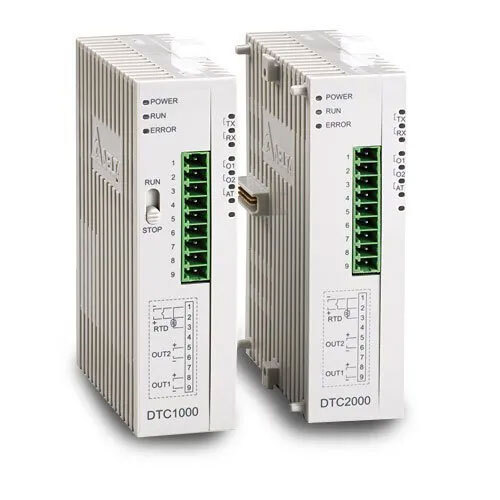
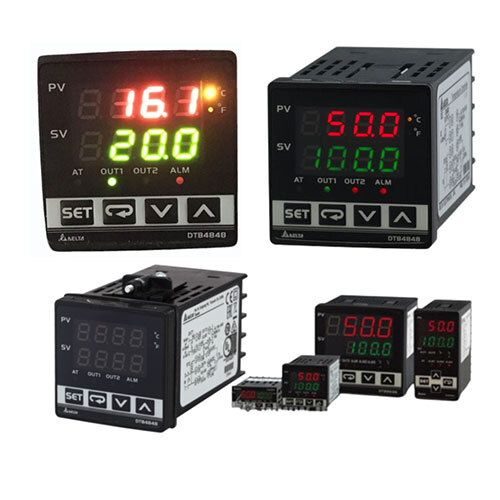
Other Products in 'Delta PID - Temperature Controller' category

Contact Details
UNITED CONTROL ENGINEERS INDIA PRIVATE LIMITED
GST : 09AACCU4195M1ZP
GST : 09AACCU4195M1ZP

- Plot No. 98, Toy City, Ecotech-3rd, Greater Noida - 201306, Uttar Pradesh, India
- Phone :08071793171
- Mr Sumit Agrawal (Director)
Mr. Pramendra Chaudhary (Director)
Mobile :+919311150492, +919990632600, +919999706958 -
 marketing@unitedcontrolengg.com
 Send Inquiry
 Send SMS

|
UNITED CONTROL ENGINEERS INDIA PRIVATE LIMITED
All Rights Reserved.(Terms of Use)
Developed and Managed by Infocom Network Private Limited.
Developed and Managed by Infocom Network Private Limited.

